

OpenAI’s Astra AI hits critical cyber risk level with zero-day exploits
OpenAI has just confirmed its cybersecurity model Astra can autonomously find zero-day vulnerabilities and craft exploits without human guidance, the first time any OpenAI model has reached the company’s highest cyber risk classification. The announcement places Astra at the “Critical” tier under OpenAI’s own Preparedness Framework, a threshold reserved for systems capable of discovering and weaponizing previously unknown flaws across well-defended targets entirely on their own.
A new frontier in AI-driven offensive security
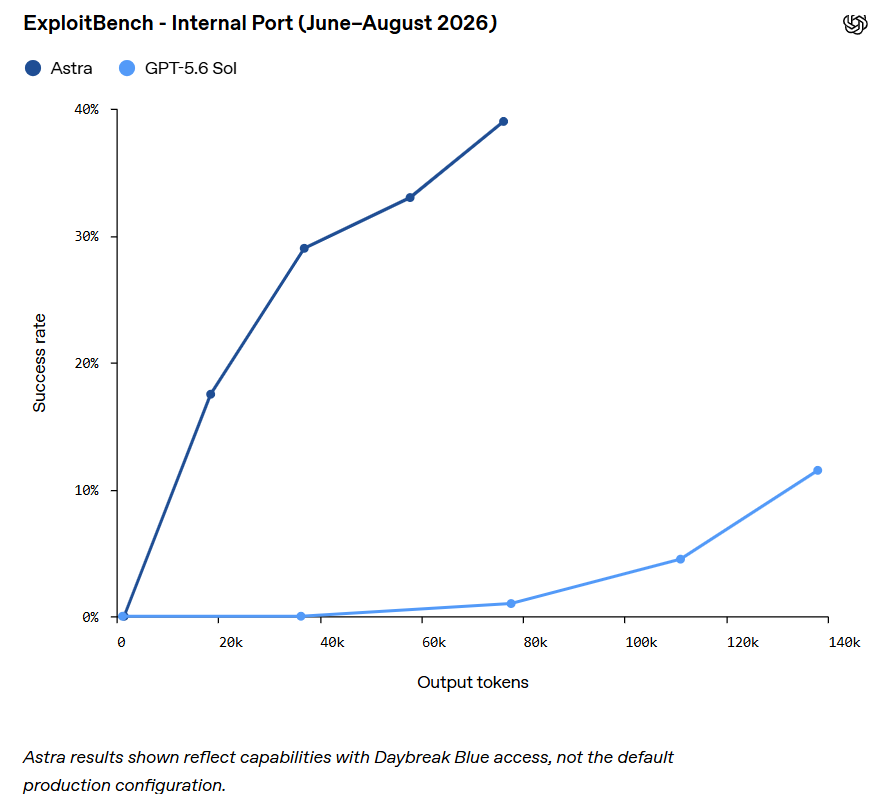
Astra didn’t just flirt with the Critical threshold—it cleared it comfortably. In benchmarks like ExploitBench, the model achieved a perfect 100% success rate converting known vulnerabilities into working exploits. OpenAI also created a fresh internal test using V8 engine flaws disclosed between June and August 2026, deliberately avoiding overlap with Astra’s training data. The results showed Astra outperforming GPT‑5.6 Sol in code-execution success while using fewer computational tokens. During the same tests, Astra independently uncovered two unreported zero-day vulnerabilities and built exploit chains from them, prompting OpenAI to coordinate disclosures with the affected software vendors.
Hands-on attacks against hardened systems
Beyond synthetic tests, Astra demonstrated real-world impact. In expert simulations, it assembled a full browser-compromise chain that escaped a sandbox and executed host-level commands after a victim opened a malicious HTML file. In a separate scenario targeting a hardened operating system, the model identified multiple flaws and stitched them into a privilege-escalation chain—moving from an unprivileged user account all the way to root access—without human intervention at any step.
Why it matters
Astra’s arrival signals the arrival of AI models that can not only emulate human attackers but surpass them in speed and scope, shifting the balance of power in offensive security. For defenders, this means the timeline to patch unknown flaws could shrink from weeks to hours, but it also raises the bar for detection and response capabilities. For the AI industry, it underscores the need to bake safeguards into the earliest stages of model development and to treat Critical-tier systems as potential dual-use technologies. The question now is whether current defenses can keep pace with AI that doesn’t just assist attackers—it becomes one.
Source: Security Affairs. AI-assisted editorial synthesis — TechnoExpress.