

Databricks Unveils Omnigent: The Universal Layer for AI Coding Agents
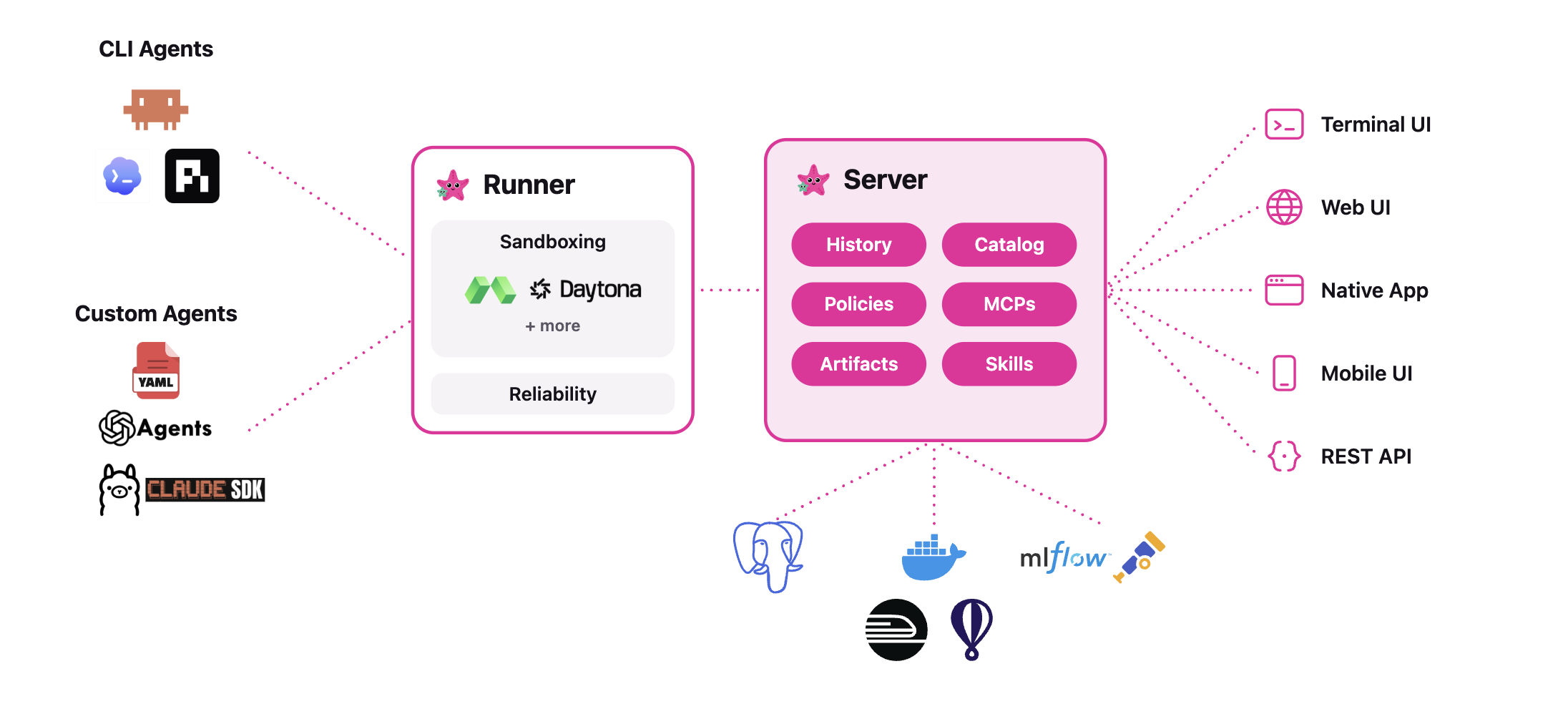
Databricks has just open-sourced Omnigent, a new meta-harness designed to standardize how AI coding agents interact, collaborate, and are governed. Built on Apache 2.0 and developed with Neon, Omnigent sits above existing agent frameworks—like Claude Code, Codex, and Pi—and turns them into interchangeable components under a single orchestration layer.
A Shared Language for Diverse Agents
Engineers today often juggle multiple AI coding helpers, each with its own session, tools, and output formats. Omnigent changes that by wrapping terminal-based agents and SDKs—including OpenAI Agents and the Claude Agents SDK—in a uniform interface. Whether it’s messages in, tool calls out, or file handling, the user-facing experience becomes consistent. This means you can switch from Claude Code to Codex in a single command, without rewriting your workflow. The system installs via two CLI aliases—omnigent and omni—and automatically detects your model credentials on first run.
Centralized Control and Secure Collaboration
Omnigent introduces a server component that acts as a policy engine and session hub. It exposes every agent session through the terminal, a local web UI (accessible at localhost:6767), and even mobile interfaces. All views stay synchronized: messages, terminals, sub-agents, and files update in real time. But the real power lies in governance. Omnigent enforces stateful policies—such as pausing an agent after a spending threshold or requiring approval before pushing to Git—at the meta-layer, not through fragile prompts.
Collaboration is built in too. Teams can join live sessions via shareable URLs, comment on files, co-drive the session, or fork conversations. Under the hood, an OS sandbox called Omnibox ensures security by isolating system access and managing sensitive tokens—like GitHub credentials—through an egress proxy, keeping secrets out of agent reach.
Ready-to-Use Patterns
The release includes two example agents: Polly, a multi-agent orchestrator that plans tasks and delegates them across parallel git worktrees, and Debby, a debate partner that queries both Claude and GPT simultaneously, displaying answers side by side and enabling structured critique. These patterns illustrate how Omnigent can be extended for planning, review, or brainstorming—all using familiar agents as interchangeable workers.
Source: MarkTechPost. AI-assisted editorial synthesis — TechnoExpress.