

DLSS Frame Generation: Why Smooth Motion still matters
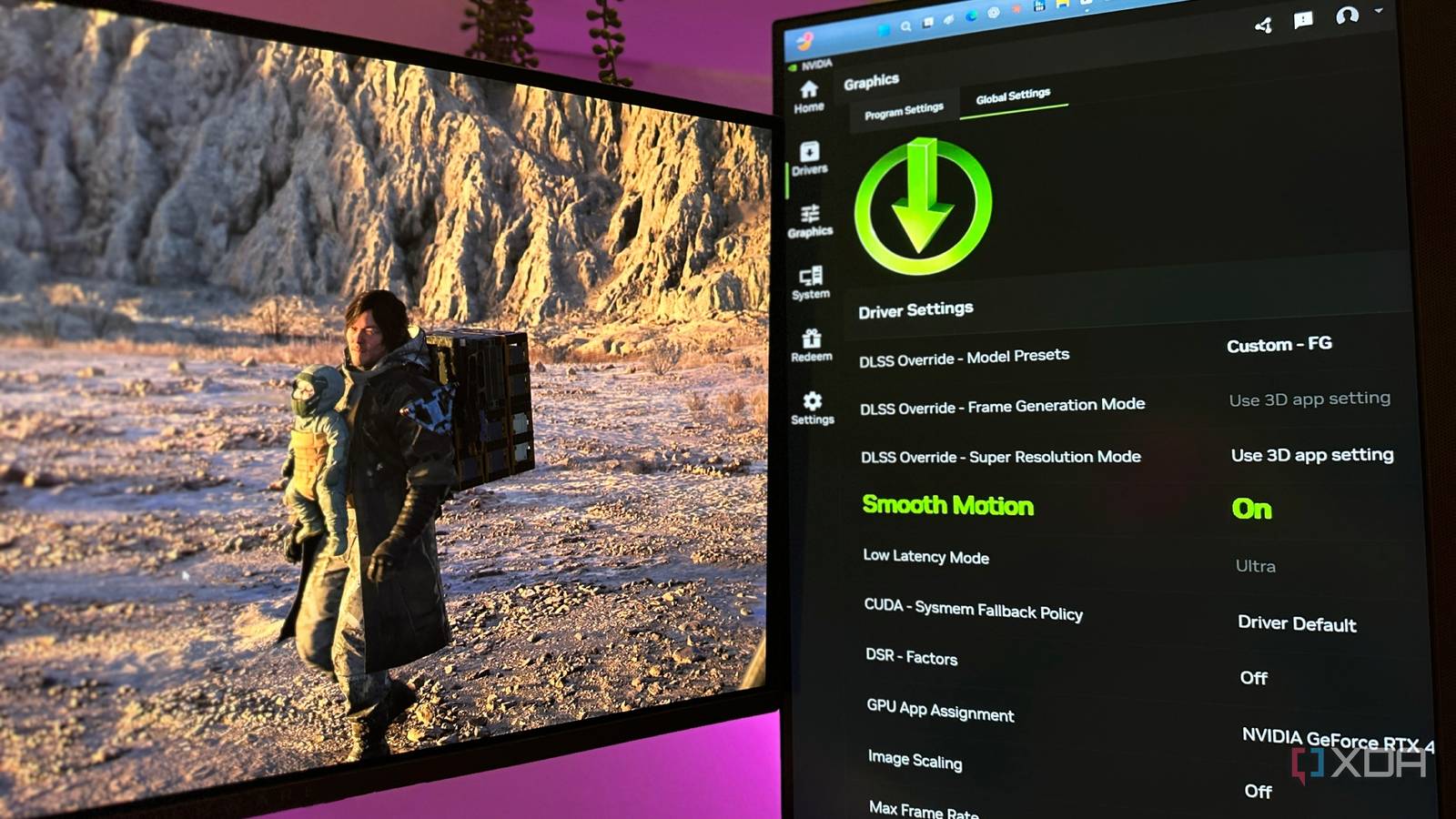
A year after Nvidia’s Smooth Motion arrived on the RTX 40 series, many gamers skipped it entirely, assuming that DLSS Frame Generation alone covered every need. After all, nearly every new game now includes native support for frame generation. Yet one tech journalist’s recent deep-dive proved that assumption wrong—and revealed why Smooth Motion still has a place in high-refresh PC gaming.
The overlooked layer in Nvidia’s visual stack
Smooth Motion doesn’t generate frames like DLSS Frame Generation; it synthesizes intermediate frames to reduce stutter and micro-stutter, especially when frame rates fluctuate. In fast-paced titles where frame drops are common, enabling Smooth Motion alongside DLSS Frame Generation can deliver visibly smoother motion without additional performance cost. The feature works by interpolating existing frames, effectively filling gaps that pure frame generation might miss.
When milliseconds make the difference
For competitive gamers running at 144 Hz or higher, every millisecond of latency and every skipped frame can impact reaction times. Smooth Motion’s interpolation helps maintain consistent motion clarity even when frame rates dip below the display’s refresh rate. It doesn’t increase FPS, but it can make the difference between a stuttery blur and a fluid, responsive experience—something frame generation alone doesn’t always guarantee.
Why it matters
Smooth Motion is easy to overlook when frame generation grabs all the headlines, but it addresses a different pain point: visual fluidity under real-world conditions. For players pushing high refresh rates or running on variable hardware, it’s a low-overhead way to smooth out the rough edges DLSS Frame Generation can’t fix. Ignoring it isn’t just an oversight—it’s leaving free smoothness on the table.
Source: XDA Developers. AI-assisted editorial synthesis — TechnoExpress.