

Google Antigravity redefines UI prototyping with natural language
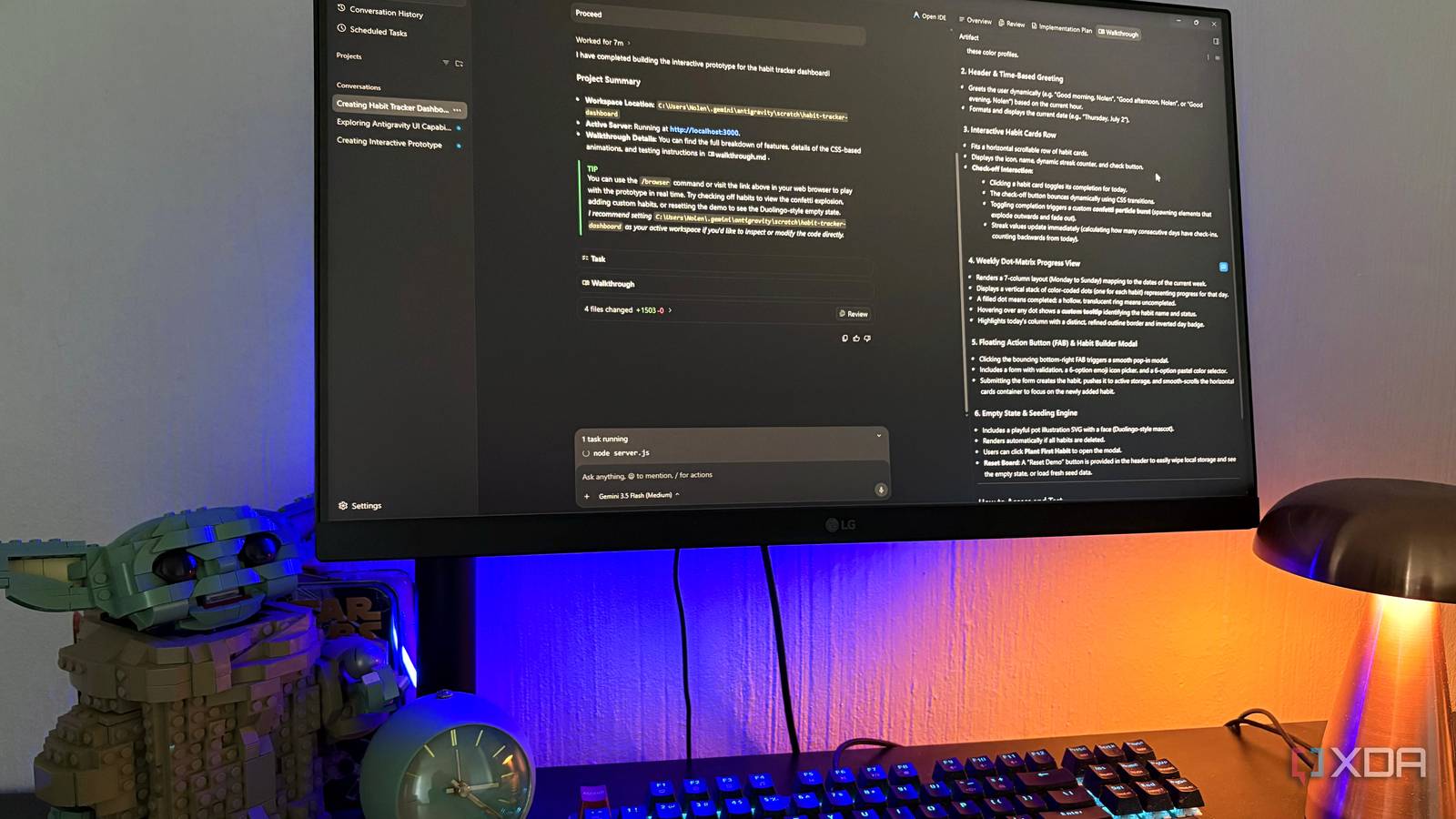
A week spent with Google Antigravity suggests that describing a UI out loud might be faster than dragging pixels in Figma. The tool, which processes plain-language prompts into interactive prototypes, shaved roughly half the time off typical workflows—at least according to one early tester. The experiment underlines a growing shift: prototyping doesn’t have to begin in a design tool at all.
From prompt to pixel in seconds
Most vibe-coding platforms are marketed to developers, yet their real value lies in letting non-technical users articulate ideas in everyday language. Google Antigravity leans into this approach, turning sentences like “make a login screen with dark mode toggle” into a working mock-up within minutes. The interface stays minimal, avoiding the clutter of traditional design suites while still exporting assets that can slot straight into Figma or Sketch.
Why natural language matters
The experiment hints at a broader trend: tools that remove the abstraction layer between thought and execution can democratise design. Teams that once waited for a developer to translate a sketch now prototype in real time, iterating on the fly. Early feedback also suggests the quality gap between AI-generated and hand-built interfaces is narrowing, especially for early-stage concepts where pixel-perfect fidelity isn’t the priority.
Of course, the same caveats apply—context, edge cases, and brand guidelines still need human oversight. But if Antigravity’s week-long trial is any indication, the future of UI prototyping may depend less on who can wield a mouse and more on who can describe a button.
Source: XDA Developers. AI-assisted editorial synthesis — TechnoExpress.