

Local AI on a budget: RTX 5070 vs integrated graphics showdown
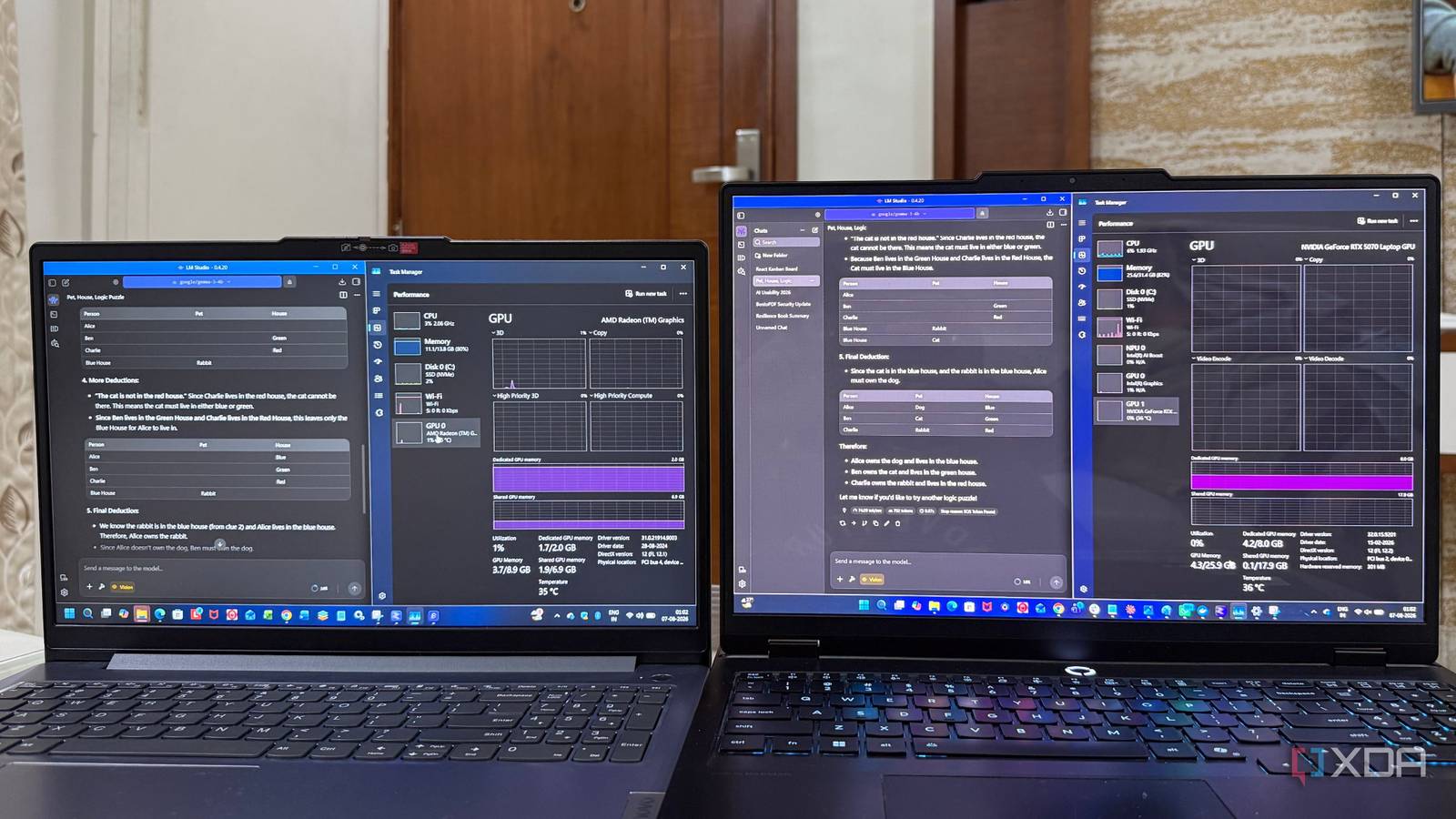
Running the same large language model locally on an RTX 5070 and on integrated graphics may sound like comparing a sports car to a bicycle, but the gap is narrower than many expect. A recent experiment by a tech reviewer put the idea to the test, pitting a dedicated mid-range GPU against Intel’s Arc graphics baked into a laptop CPU. The goal wasn’t to crown a winner in raw power, but to see how close today’s integrated graphics have gotten—and whether a budget-conscious setup can handle modern AI tasks without compromise.
The hardware under the microscope
The test focused on identical model configurations, running the same local LLM inference workload across two systems: one with an RTX 5070 and another with Intel Arc graphics. While the RTX 5070 delivered predictably faster response times and smoother output, the integrated graphics unit held its own in key areas. Latency remained within acceptable limits for interactive use, and the model’s output quality showed minimal degradation. The reviewer noted that for smaller models or tasks that don’t demand real-time responsiveness, integrated graphics can be a practical solution—especially in thin-and-light devices where power efficiency matters more than peak performance.
Where the lines blur
What stood out wasn’t just the performance parity in certain scenarios, but the broader implications for accessibility. Local AI no longer requires a high-end graphics card to get started. The integrated graphics result suggests that casual users, developers prototyping models, or even educators running demo environments can achieve meaningful results without investing in expensive hardware. This shift lowers the barrier to entry, making it easier for more people to experiment with on-device AI—something that could accelerate innovation in privacy-focused and offline applications.
Why it matters
This comparison highlights a turning point in local AI adoption. While dedicated GPUs still offer clear advantages for heavy workloads, integrated graphics have closed the performance gap for everyday use cases. For consumers and small teams, this means more flexibility in hardware choices—and potentially lower costs. For the industry, it signals growing maturity in AI optimization, where efficiency and accessibility are becoming as important as raw power. The real win isn’t which setup is faster, but that more people can now run AI locally without compromise.
Source: XDA Developers. AI-assisted editorial synthesis — TechnoExpress.