

Progress orders ShareFile servers offline amid security alert
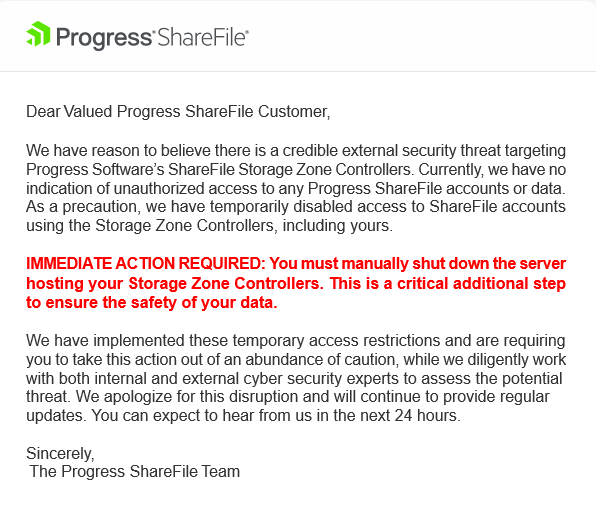
Progress Software has ordered customers using ShareFile Storage Zone Controllers to shut down their internet-facing Windows servers with immediate effect, warning of a credible external security threat under investigation. The company sent an urgent email on July 10 with the subject line “Service Disruption. Immediate Action Required,” instructing organizations to power down their on-premises controllers as a precaution. The alert became public when a system administrator shared the notice on Reddit’s r/sysadmin shortly afterward.
Storage Zone Controllers act as the bridge between ShareFile’s cloud platform and a company’s local storage, handling every file upload and download. Because they typically sit at the network edge with public internet exposure, they are both critical to operations and attractive targets for attackers. In response to the threat, Progress has temporarily disabled cloud access for affected accounts while emphasizing that manual server shutdowns are now required.
A familiar pattern of risk
Progress confirmed the move follows an “abundance of caution,” stressing that there is currently no indication of unauthorized access to ShareFile accounts or data. Still, the company has not disclosed details about the threat actor, compromise status, affected versions, or a timeline for restoring service. Only hybrid deployments using Storage Zone Controllers are impacted; standard cloud-only accounts remain unaffected.
Why it matters
This incident underscores the persistent risks tied to hybrid file-sharing architectures that expose on-premises components to the internet. Organizations running Storage Zone Controllers must now weigh operational downtime against the potential fallout of an undetected compromise. With no public indicators of compromise or remediation timeline, the burden falls on customers to secure their infrastructure while Progress continues its investigation.
Source: Security Affairs. AI-assisted editorial synthesis — TechnoExpress.