

Tiny AI Breakthrough: 28.9M LLM Runs on ESP32-S3
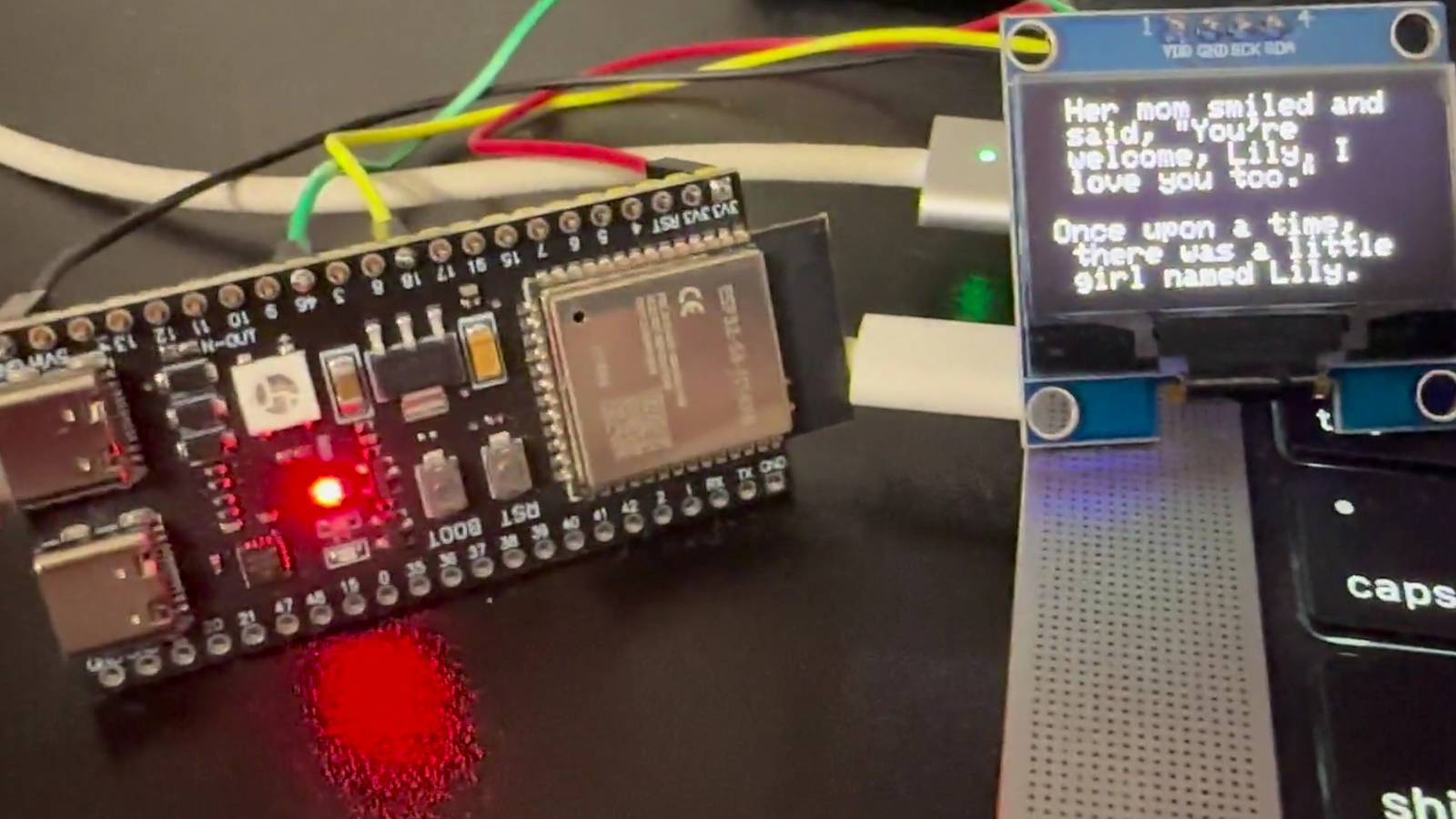
A 28.9-million-parameter large language model now fits—and runs—on a $10 microcontroller, pushing the boundaries of what embedded devices can do. The stunt was pulled on an ESP32-S3, a chip known for its wireless radios and modest 240 MHz dual-core CPU, proving that even modest hardware can host surprisingly capable AI when the model is pared down to size.
From lab curiosity to DIY reality
The feat wasn’t just a stunt: the developer documented the process so others can reproduce it. By quantizing the model to 8-bit integers and trimming non-critical layers, the team slashed memory and compute demands without collapsing accuracy. The result is a chatbot that can spin coherent short stories, albeit with a limited vocabulary and a tendency to stall after a few sentences. Still, it’s enough to show that LLMs aren’t confined to data centers anymore.
What this means for hobbyists and engineers
For makers and small teams, the project lowers the financial and technical barriers to experimenting with generative AI. A $10 board and a USB cable can now serve as a portable inference engine for simple text tasks. It also highlights the growing ecosystem around tinyML tools and libraries that help compress and deploy models on microcontrollers.
Why it matters
This experiment isn’t about replacing cloud LLMs; it’s about enabling AI where connectivity is unreliable or privacy is paramount. Devices that can reason locally—even crudely—can keep functioning when networks fail and avoid sending sensitive data to the cloud. For the industry, it’s a reminder that the next wave of AI innovation may come not from bigger models, but from smarter deployment on everyday hardware.
Source: XDA Developers. AI-assisted editorial synthesis — TechnoExpress.