

Why 120FPS with AI upscaling can feel worse than 60FPS
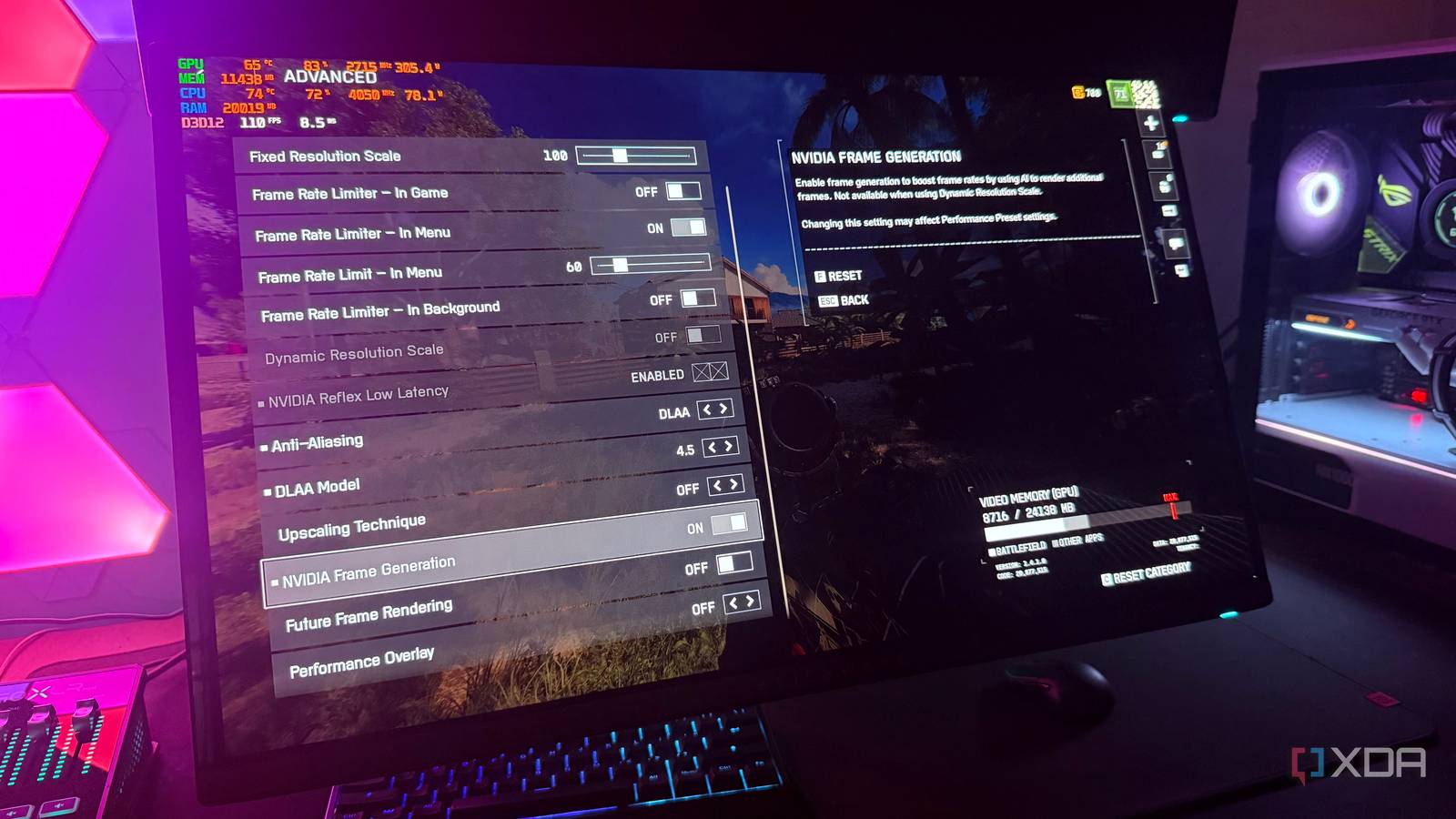
The latest wave of AI-powered frame boosting is arriving with NVIDIA’s RTX 50-series, and Multi Frame Generation promises to triple or even sextuple your framerates in supported games. At first glance, the numbers are jaw-dropping: 120FPS, 180FPS, or even higher in demanding titles with ray tracing enabled. Yet as XDA Developers points out, those headline-grabbing figures don’t tell the full story—and the actual gaming experience can fall short of native 60FPS.
The illusion behind the FPS counter
Multi Frame Generation works by inserting interpolated frames between the ones your GPU actually renders, creating a smoother-looking motion on screen. The technique can push frame rates well beyond what the hardware could deliver natively, especially at 4K with ray tracing. But the downside lies in the starting point. When Multi Frame Generation is applied to a low base frame rate—say 20FPS—the resulting 60FPS or 120FPS may look smoother on paper, but the underlying stutter from the original low frame rate can still bleed through, making the experience feel inconsistent and less responsive than a truly stable 60FPS.
A trade-off between numbers and feel
For competitive gamers, input latency and frame pacing matter as much as raw FPS. Multi Frame Generation introduces processing overhead that can delay input recognition and create subtle hitches, eroding the responsiveness that makes 60FPS feel crisp. Meanwhile, in cinematic single-player titles, the visual smoothness may improve, but the unnatural cadence of interpolated frames can feel artificial compared to native rendering. The feature’s effectiveness ultimately hinges on the initial frame rate: the higher the starting point, the more convincing the result.
Why it matters
For players chasing benchmark records, Multi Frame Generation delivers eye-catching frame rates with minimal effort. But for those who prioritize smoothness, consistency, and responsiveness, the numbers alone don’t guarantee a better experience. The gap between synthetic FPS and real-world feel highlights a growing tension in modern GPU features: raw performance is easy to measure, but the quality of the experience remains far harder to quantify. As AI upscaling tools proliferate, understanding their trade-offs will be essential for gamers deciding how—and when—to use them.
Source: XDA Developers. AI-assisted editorial synthesis — TechnoExpress.