

Father revives dead RTX 3070 with radio capacitor repair
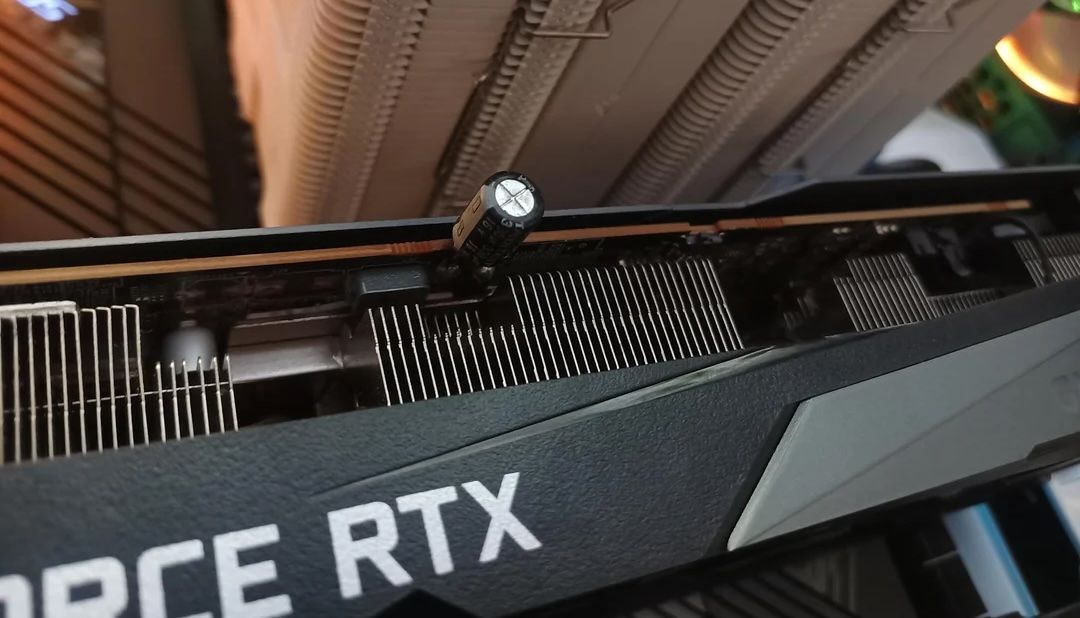
A dead RTX 3070 found new life not in a high-end repair shop, but on a kitchen table in Serbia—thanks to a capacitor plucked from an old radio and the steady hands of a 55-year-old electrician. The gamer behind the repair shared the story on Reddit, where it quickly became a reminder that sometimes the best tools aren’t the newest ones, but the ones you already trust.
The trouble began when the GPU’s cooling assembly shifted during transport, dislodging a 16V 270 µF capacitor from its socket. Without the exact replacement, a local repair quote of 12,000 Serbian dinars—about $120—left the owner searching for alternatives. Enter Alexander, the gamer’s father, who has spent 35 years maintaining power lines and handling delicate electrical work. Drawing on decades of experience, he bypassed the need for a perfect match by installing a larger, cheaper capacitor from an old radio. It sticks out awkwardly from the card but powers it up—at least for now.
Beyond the capacitor swap, Alexander also refreshed the GPU’s thermal paste with a high-voltage line compound he uses at work. Early benchmarks show peak gaming temperatures around 80°C, which, while elevated, remain within safe thresholds for short-term use. Still, the jury’s out on long-term reliability. The oversized capacitor’s higher resistance risks letting clocks run wild, and the jury-rigged solution was never meant to be permanent. The original component remains on the family’s shopping list.
A lesson in resourcefulness over perfection
The story underscores how deep technical knowledge and scrappy ingenuity can outperform expensive replacements—at least temporarily. It also highlights the importance of proper component sourcing; while the GPU limps along, the mismatched capacitor could eventually lead to instability or failure. For enthusiasts watching their budgets, the repair is a testament to the value of understanding your hardware before rushing to the repair shop.
Why it matters
This isn’t just a feel-good fix—it’s a practical look at how accessible skills and repurposed parts can save money without sacrificing immediate function. For the DIY community, it’s a nudge to explore repairs before defaulting to costly services. For manufacturers, it’s a reminder that fragile components and limited availability can push users toward creative, if imperfect, solutions—often with real consequences down the line.
Source: Tom's Hardware. AI-assisted editorial synthesis — TechnoExpress.