

Cyborg cockroaches dive into disaster zones with 3D-printed scuba tech
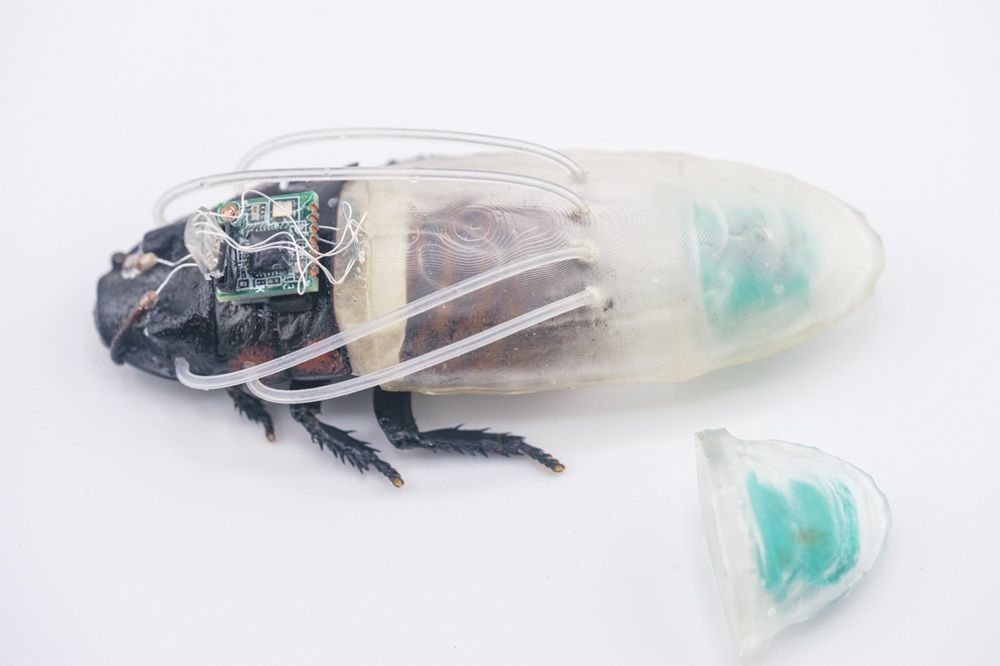
In a blend of biology and engineering that feels plucked from a cyberpunk flick, researchers have transformed common cockroaches into remote-controlled aquatic explorers. A Singapore-based team led by Hirotaka Sato at Nanyang Technological University outfitted the insects with lightweight 3D-printed scuba gear and infrared cameras, enabling them to navigate flooded areas for up to three hours while remaining steerable from afar.
From lab bench to rescue line
The project builds on two decades of cyborg-insect research, but the latest upgrade solves a key limitation. Previous versions could only operate on land, leaving flood zones beyond reach during disaster response. To bridge that gap, the team designed a breathable “diving suit” that delivers oxygen via a chemical reaction inside a tiny tank. A sponge containing hydrogen peroxide and manganese dioxide slowly releases oxygen to the cockroach’s spiracles, avoiding the weight and complexity of a pressurized tank. The result is a living robot that paddles through water at nearly the same speed as on dry ground.
Why cockroaches make ideal first responders
Cockroaches bring unique advantages to miniature search missions. Their segmented legs respond easily to tiny electrical impulses, allowing precise remote control, while their robust bodies handle uneven terrain better than many small robots. They also require minimal upkeep, feeding only every few weeks—critical when miniaturized power sources remain a bottleneck. With built-in infrared vision and wireless communication, these cyborg insects could scout collapsed buildings or flooded tunnels where human responders or drones struggle.
Looking ahead, the team envisions swarms of aquatic roaches mapping disaster zones, and even adapting them for harsher environments such as Mars. Given that cockroaches can survive weeks without food, withstand high radiation, and hold their breath by sealing their spiracles, their reputation as indestructible pests may soon extend to becoming indispensable scientific collaborators.
Source: Tom's Hardware. AI-assisted editorial synthesis — TechnoExpress.