

Intel’s abandoned Optane still haunts today’s SSDs
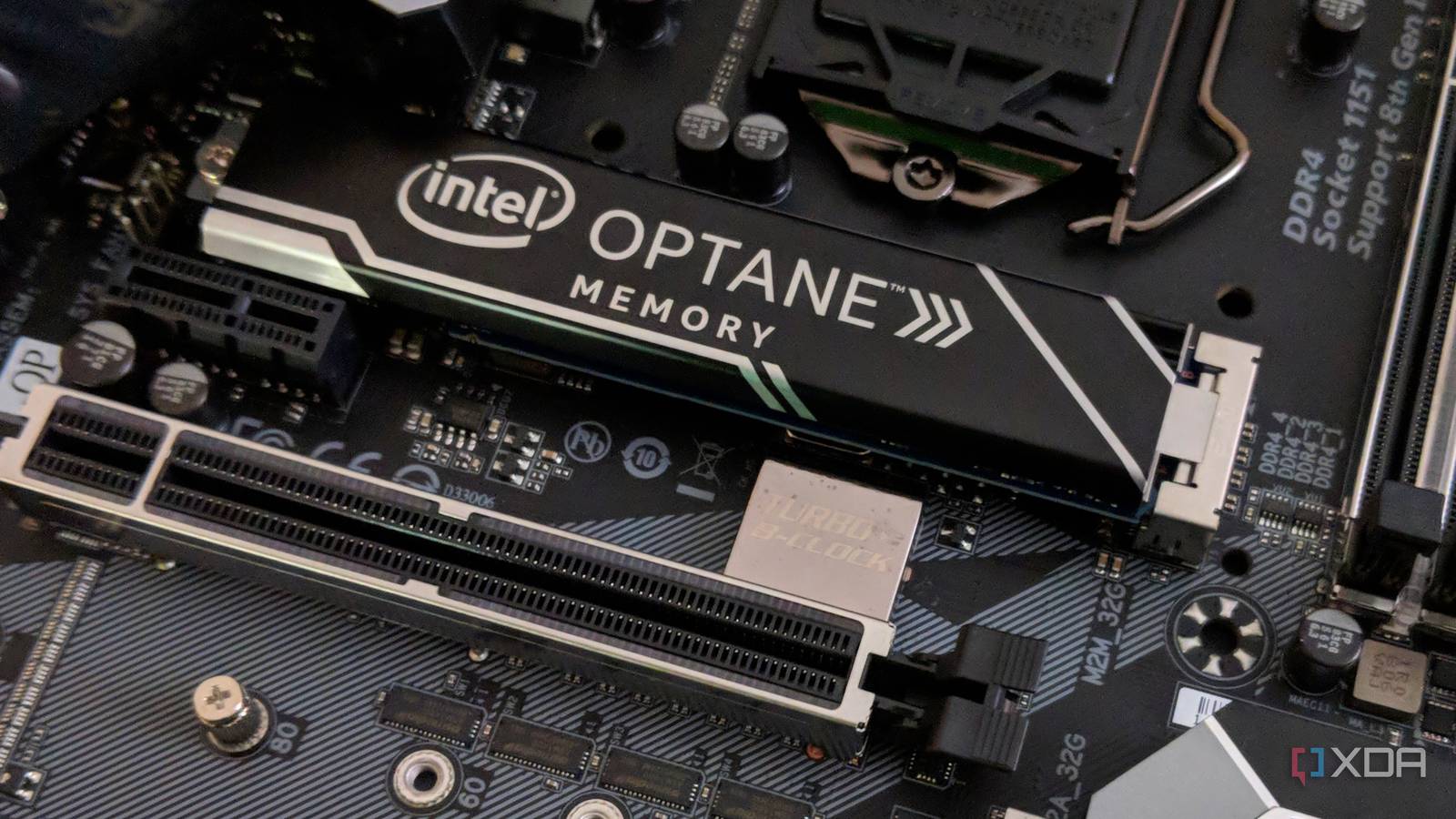
Five years after Intel pulled the plug on its 3D XPoint Optane SSDs, the memory tech refuses to die—at least in benchmarks. The first-generation Intel Optane Memory 32 GB module, released in 2017, offered latency and endurance that most modern NVMe drives can’t touch. Even in retirement, Optane’s ghost lingers in storage reviews, where reviewers still reach for it as the gold standard for responsiveness.
The forgotten champion of responsiveness
Optane wasn’t just another SSD. Built on 3D XPoint, a phase-change memory technology co-developed with Micron, it eschewed the NAND flash found in every other drive. Where NAND stores data in floating-gate transistors, 3D XPoint used microscopic cells whose resistance changed to represent 0s and 1s. The result: near-instant access times, consistent performance under load, and write cycles measured in millions rather than thousands. Intel marketed Optane primarily as a caching device, but enthusiasts quickly discovered its true potential as a primary boot drive.
What happened to the dream
Despite its promise, Optane never achieved mainstream adoption. High production costs, limited capacity options, and competition from cheaper, higher-capacity NAND drives doomed the platform. By 2022, Intel officially discontinued Optane, leaving a void that no successor has filled. Today’s PCIe 4.0 and 5.0 NVMe drives deliver blistering sequential speeds, but in everyday responsiveness—random 4K reads, application launch times, or sustained multitasking—they often pale next to an eight-year-old Optane module.
Why it matters
Optane’s failure wasn’t a technology problem; it was a market problem. The industry moved on to density and throughput, trading latency for capacity and cost. Yet the benchmarks prove that the Optane approach still sets a ceiling for real-world performance. For power users, creators, and latency-sensitive workloads, the absence of a true successor means settling for compromises. Until a new class of storage emerges, the ghost of Optane will continue to remind us what we lost—and what we still can’t quite replace.
Source: XDA Developers. AI-assisted editorial synthesis — TechnoExpress.