

MiniMax Unveils MSA: Efficient Sparse Attention for Long Contexts
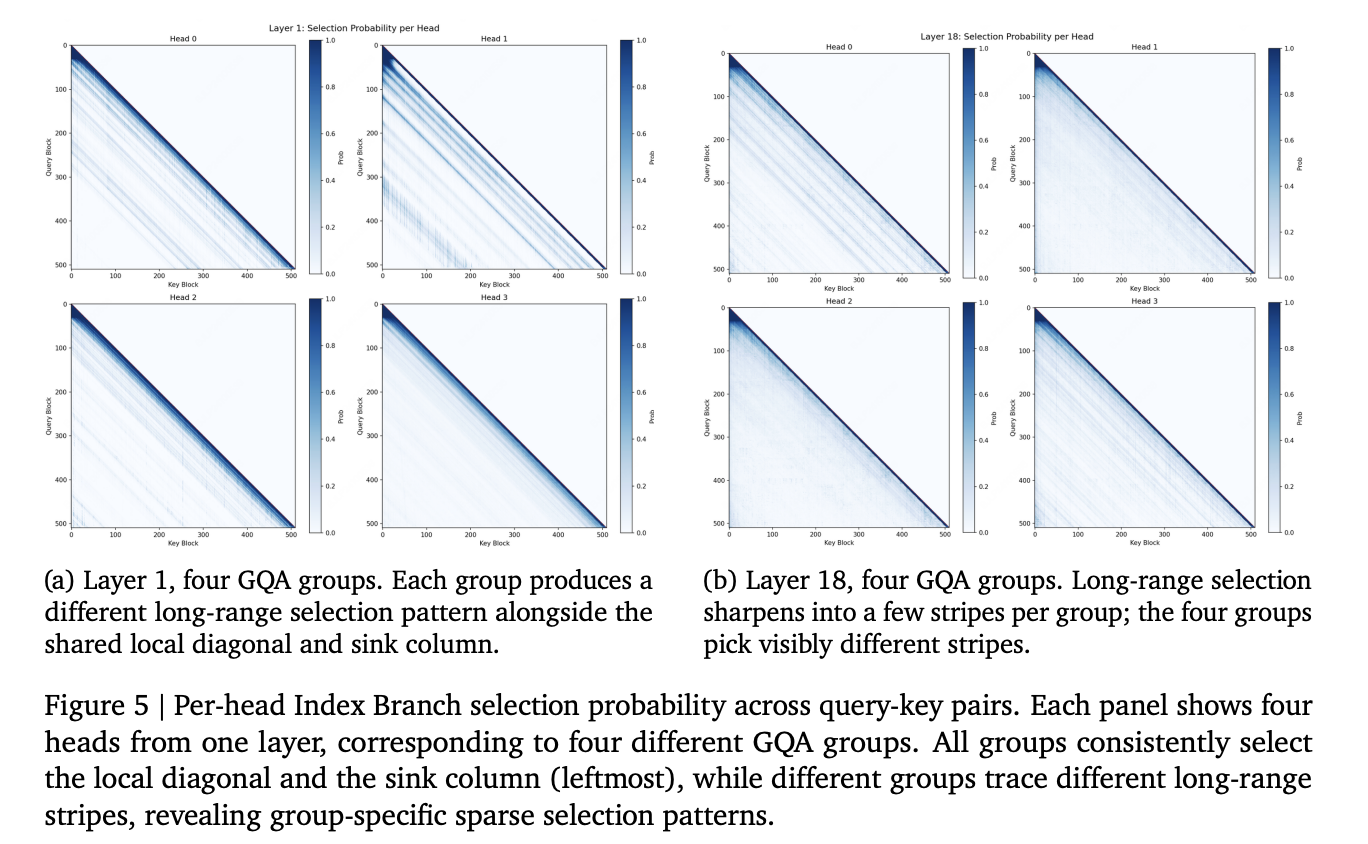
MiniMax has launched MSA (MiniMax Sparse Attention), a novel sparse attention mechanism designed to tackle the computational inefficiencies of traditional softmax attention in long-context scenarios. By addressing the quadratic cost of attention at extended token lengths, MSA enables faster, more scalable model training and inference, with potential applications in complex tasks like multi-modal reasoning and extended dialogue. The method, built on Grouped Query Attention (GQA), was tested in a 109B-parameter MoE model and open-sourced alongside a production model, MiniMax-M3.
How MSA Works: Two-Branch Architecture
MSA splits attention into two stages: an Index Branch and a Main Branch. The Index Branch identifies which key-value blocks each query should access, while the Main Branch performs exact softmax attention only on those selected blocks. By operating at the block level (default size: 128 tokens), MSA limits per-query key-value tokens to 2,049, drastically reducing computational overhead. This approach scales as O(kBk) instead of O(N), making it increasingly efficient as context length grows.
Training MSA: Overcoming Sparse Challenges
Training sparse attention models is tricky due to non-differentiable top-k selection. MSA solves this with a KL alignment loss, matching the Index Branch’s distribution to the Main Branch’s attention patterns. Additional safeguards, like gradient detaching to isolate index projections and indexer warmup to stabilize training, ensure robustness. Ablation studies refined the design, eliminating redundant components for efficiency.
Implications for Large Models
MSA’s efficiency gains could redefine how large models handle long-context tasks, from chatbots to document analysis. By reducing compute costs without sacrificing accuracy, MiniMax positions MSA as a key innovation in scalable AI. The open-sourced inference kernel and production model suggest rapid real-world adoption, potentially setting a new standard for attention mechanisms in the industry.
Source: MarkTechPost. AI-assisted editorial synthesis — TechnoExpress.