

Wireless signals made visible with Raspberry Pi 5 hack
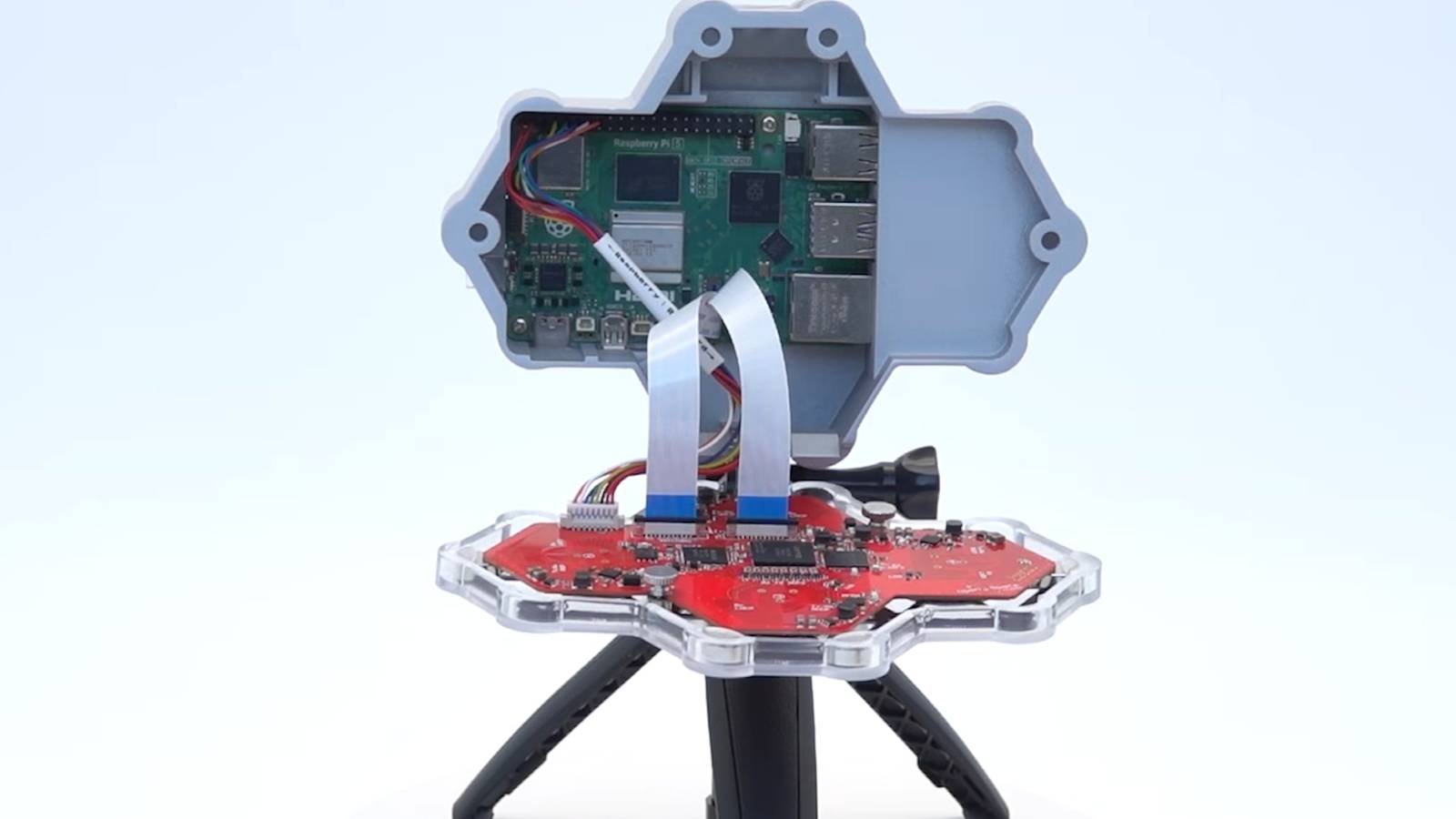
Wireless signals hum around us every second—hidden currents of data that carry everything from cat videos to banking transactions. Yet these invisible waves remain just that: invisible. A new open-source project flips the script, turning a humble Raspberry Pi 5 into a pocket-sized Wi-Fi radar that paints real-time maps of nearby wireless activity as glowing, ever-shifting shapes on a small screen.
Built around an RTL-SDR dongle and a few lines of Python, the setup samples the 2.4 GHz and 5 GHz bands, then renders signal strength and direction as colorful blobs that pulse and drift in response to devices pinging the air. Unlike static heatmaps, this live view lets users watch their own router’s footprint shrink when they step behind a wall or sprawl when neighbors fire up their laptops. It’s a playful yet practical demo of software-defined radio on a credit-card-sized computer.
From hobby board to signal scope
The trick lies in the RTL-SDR’s ability to tune into raw RF at low cost, combined with the Pi 5’s faster CPU and USB 3.0 ports that keep the stream of samples flowing without dropouts. A simple dipole antenna picks up the faintest whispers of Wi-Fi, while a small OLED or TFT display refreshes the visualization several times per second. No oscilloscopes or spectrum analyzers required—just $50 of off-the-shelf parts and a GitHub repo.
What it means for makers—and beyond
For tinkerers, the project is a neat entry point into SDR and RF hacking, offering instant feedback that turns abstract concepts into tangible art. More broadly, it spotlights how accessible signal intelligence has become: the same principles could seed future classroom tools, network diagnostics, or even art installations that respond to the invisible chatter of a room.
Why it matters
This build doesn’t just make Wi-Fi pretty—it shrinks spectrum analysis from lab equipment to lunchbox size, lowering the barrier for anyone to explore the radio landscape. In an era when wireless devices multiply daily, tools that demystify the airwaves can empower smarter network planning, security checks, and even creative expression. The real takeaway: the invisible is only invisible until someone builds a gadget to reveal it.
Source: XDA Developers. AI-assisted editorial synthesis — TechnoExpress.